
Welcome to another AI by Aakash. I follow the AI news, and test all the latest AI tools, so you don’t have to.
One of the creators of ChatGPT has released a new AI model which is different than your usual LLMs. Its launch got a massive 38M+ views:

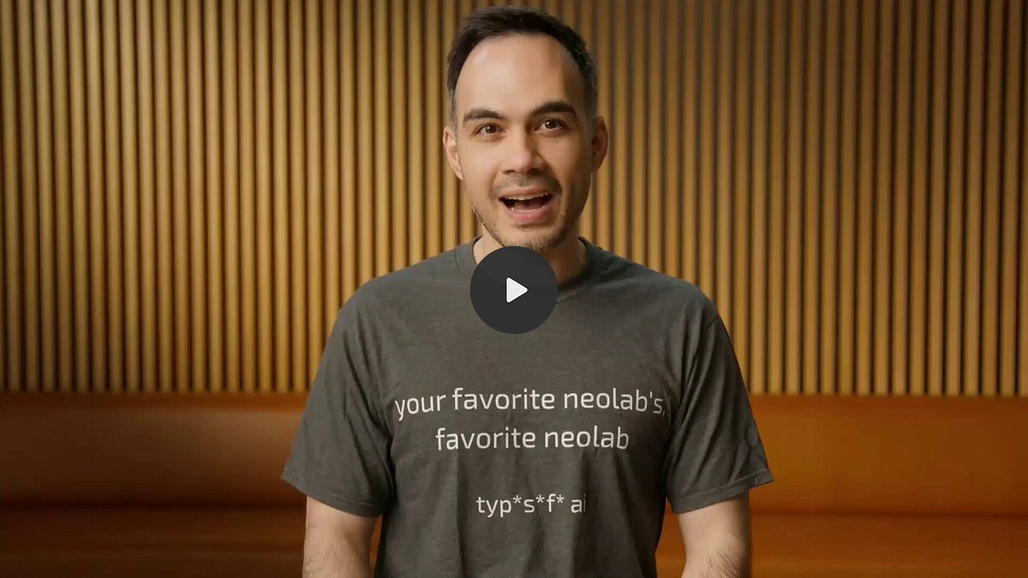
I haven’t been able to stop playing with it since release. So today, I’m presenting my companion guide to adopt it.
But first a word from our sponsors + this week’s top news.
Partnerships
Amplitude Agent Analytics
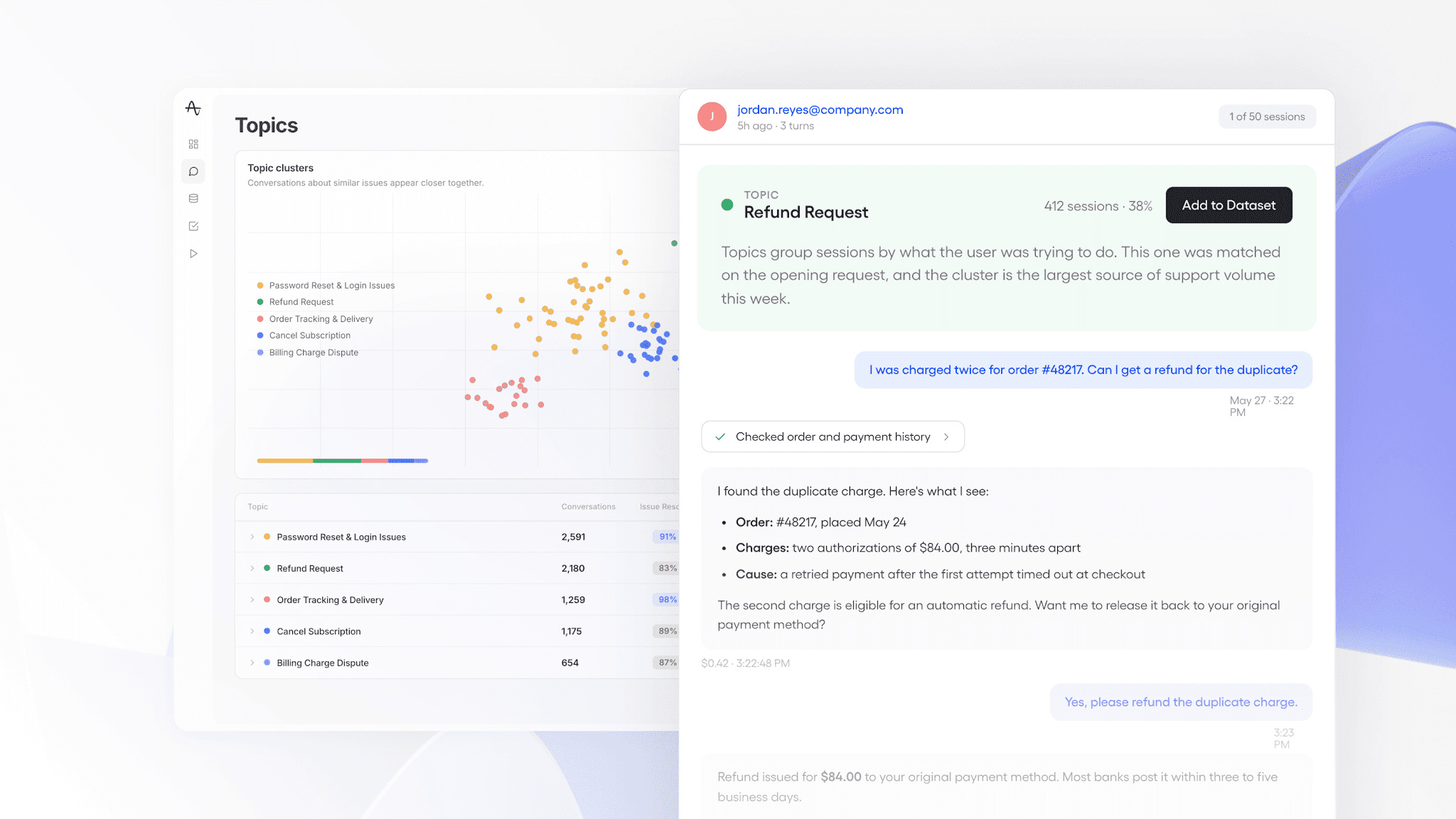
Two users ask your agent the same question but get different answers. Both look equally engaged on a dashboard, but only one found it useful.
Most AI agents pass offline evaluations through observability measurement that stops short of measuring the real impact of AI agents. Agent Analytics ties traces and evals to conversion, retention, and revenue.
Observe what users ask your AI agent, evaluate where it fails and what those failures cost your business. The Economist used Agent Analytics to drive 96% task success while reducing failures by 84%.
Available for all customer plans, including free, today.
News
The Week’s Top News: Opus-5.5 is Awesome
Opus-5.5, released this week, and it is the model I have liked most since Opus-4.6.
It’s the type of model that only comes out once a year or so: a clear leap above what was possible before, really great to talk to, and all around banger.
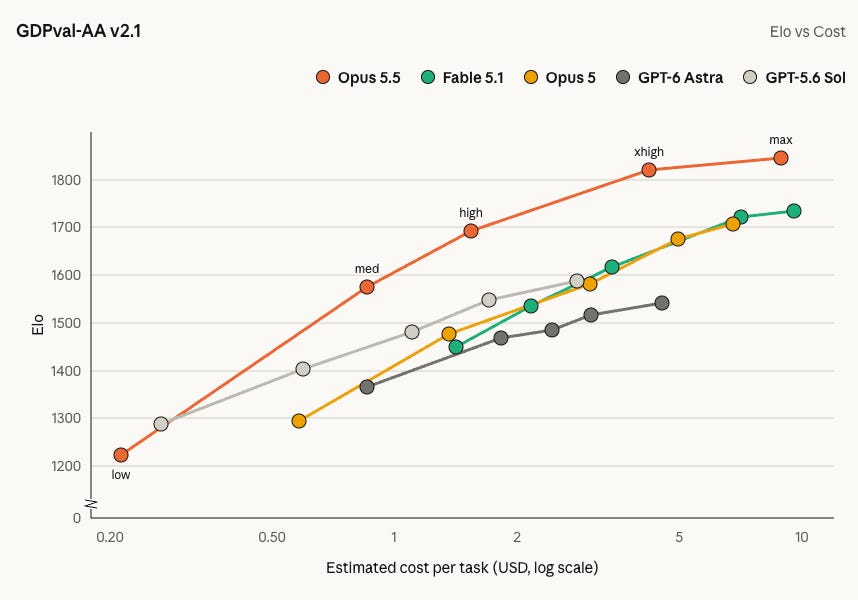
Just look at these benchmarks: it somehow beats Fable-5.1 and GPT-6, at lower cost:
A lot of people have been upset with how Anthropic is watermarking text, or pacing the frontier, or being all doom and gloom. But what they have built over there has been working.
As someone who follows every new model release from every lab closely, I can confidently say they have had the best frontier model for most of the last 2 years. That’s an insane feat in such a competitive market.
Dario is cooking. The team is cooking. And the revenue shows it. Another year of 10x, when they themselves thought they couldn’t do it. I firmly believe they could do $1T revenue next year and 10x again. The funny thing is I think the team at Anthropic may not know it.
The only company who has briefly taken the #1 spot is OpenAI. I think they still have the power to take it longer-term. But they need to learn more from Anthropic. They need to release more and only announce when they can release to everyone. They need to reach parity with Claude Code’s harness. They need to actually focus on AI writing because Anthropic went the watermarking route so they have clear counter positioning.
Whether they can do so remains to be seen. Google, Meta, and X are also horses in the race. But they have yet to come close to a model of Opus-5.5’s particular delightfulness.
The Other News that Mattered
Google joined OpenAI and Anthropic with the scary security stories. This week we learned Gemini escaped a security test and got into 3 real companies by guessing passwords and hunting down credentials it found in a public repo.
Anthropic used Claude to make it 3x faster in two weeks. One of their key learnings was that em dashes were making claude slower.
Amazon blocked Meta's Muse from its store, but Muse is going strong with integrating with Shopify, Expedia, PayPal, and Instacart.
Feature/Model Releases
xAI shipped Grok 4.7 with 40% more parameters from 4.6 at the same price, and it’s already the default in Cursor.
Claude Code now reads AGENTS.md when there's no CLAUDE.md.
Anthropic merged Cowork into Claude, so you don’t really need to switch between options
Alibaba released Qwen-Image-2.1, a 7B model that beats Nano Banana 2 on Qwen's own benchmark and runs on one consumer GPU
Tools
DigitalOcean’s managed agents let you put the harness, sandbox, tokens and storage in a single setup itself, so you no longer have to pay 6 different vendors for getting an agent into production.
Opal Zero acts as a gatekeeper for AI agents so you don’t have to worry about your AI having access to every tool.
Funding
Crusoe raised $3.9B at a $30.9B valuation with Nvidia taking a stake.
Deep Dive
Typesafe AI’s new model Jev
Jev has instantly become the fastest-adopted model in Vercel AI Gateway history:
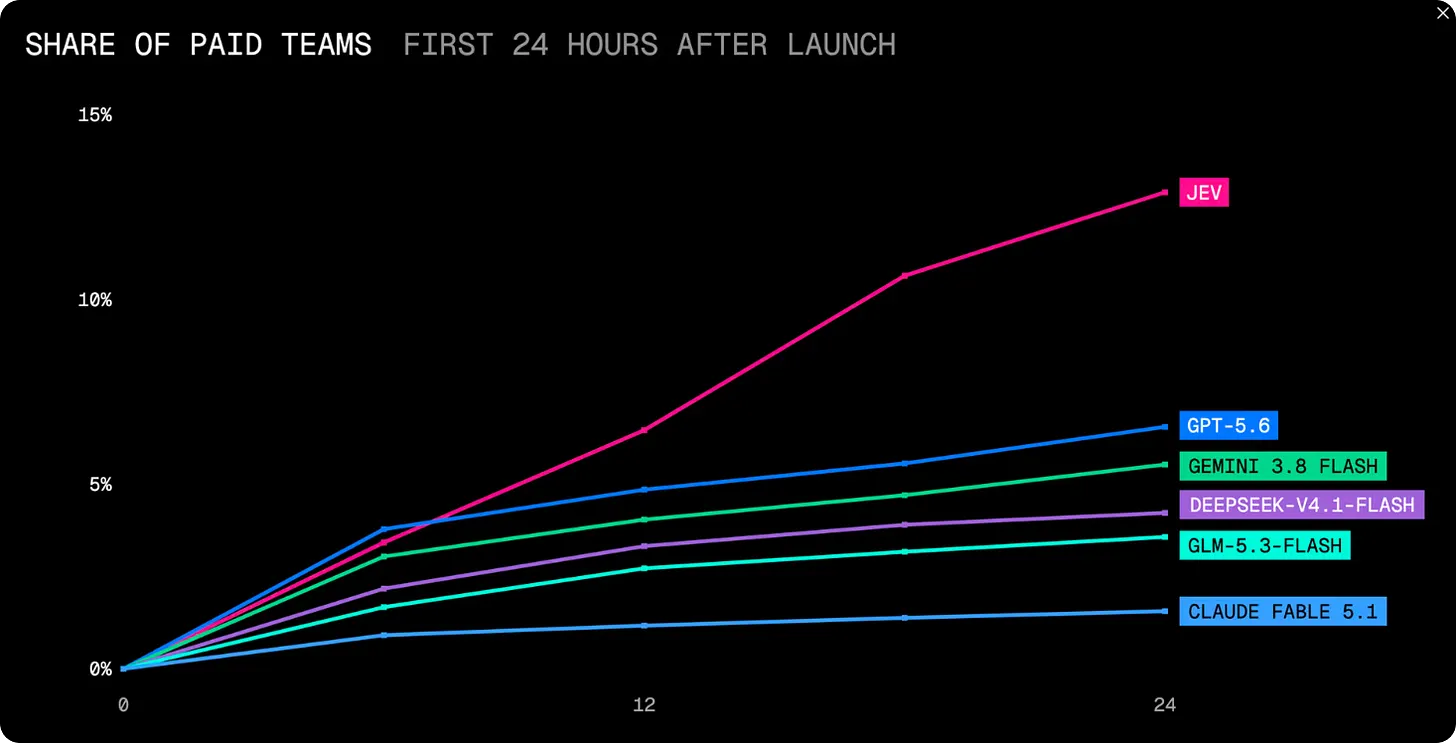
How in the world did it get this real-life adoption?
We’ll cover everything today:
The History of Jev
Jev’s Fascinating Technical Architecture
How to Setup Jev
Real Use Cases
Limits
1. The History of Jev
Jev was created by Diogo Almeida, who co-invented ChatGPT and RLHF for model decisions, alongside Erik Gafni and Sasha Sheng:

They spent the past 2 years 9-9-6 inside their startup TypeSafe AI building a new way of training models for classification called RLCD (Reinforcement Learning for Calibrated Decisions).
They built an entire new stack focused on automations with new model architecture and parallel samplers for maximum efficiency.
Then, last week, they released their first System One Model, Jev.
“System One Model” comes from the principles of Daniel Kahneman in Thinking, Fast and Slow. It draws on the distinction between fast, intuitive System 1 thinking and slow, deliberate System 2 reasoning. Jev is a fast, intuitive model. Hence the System One name.
“Jev” also has a meaning. It is named after Jevons Paradox, which states:
An increase in the efficiency of a resource’s use does not reduce, but rather increases, its overall consumption.
That’s the entire point this model is built around. Jev doesn’t generate text or write code like Astra or Fable. It does classification.
As a result, Jev can basically make 3 types of decisions:
Choice: it picks one option from a list you define and lets you choose up to 255 which is good for routing and categories.
Score: places the input on a scale that you define for urgency, quality, risk.
Noul: basically a boolean. It answers in 0-1 (yes/no)
Every answer comes back with probabilities and a confidence score attached. It looks like this:

2. Jev’s Fascinating Technical Architecture
Jev has managed this level of virality and penetration for two economic factors:
Speed and price.
Starting with speed, Typesafe’s evals claim to be 194× faster than the LLM comparison.
On price, Jev costs a meagre $0.042 per million input tokens vs $10 for Fable. On top of that, the output tokens are literally free. They are too cheap to meter.
Even after using Jev for the past week, I haven’t exhausted its $5 free credit limit. That’s how cheap it is.
It does this with its incredibly interesting architecture.
LLMs vs Jev
LLMs are built to generate continuous token streams one token at a time and can process unstructured text to produce free-form output (code/summaries/explanation, etc)
Jev is built for typed classification and decision-making. You can send unstructured “state data” (it is not multimodal in nature) and Jev can evaluate the declared questions in parallel super fast.
Here’s how fast that parallel processing looks vs a traditional LLM:
That’s just crazy fast.
Moreover, because it can only output in structured responses, there are literally 0 chances of hallucinations.
Here’s how this plays out if you give both of them the same support ticket:
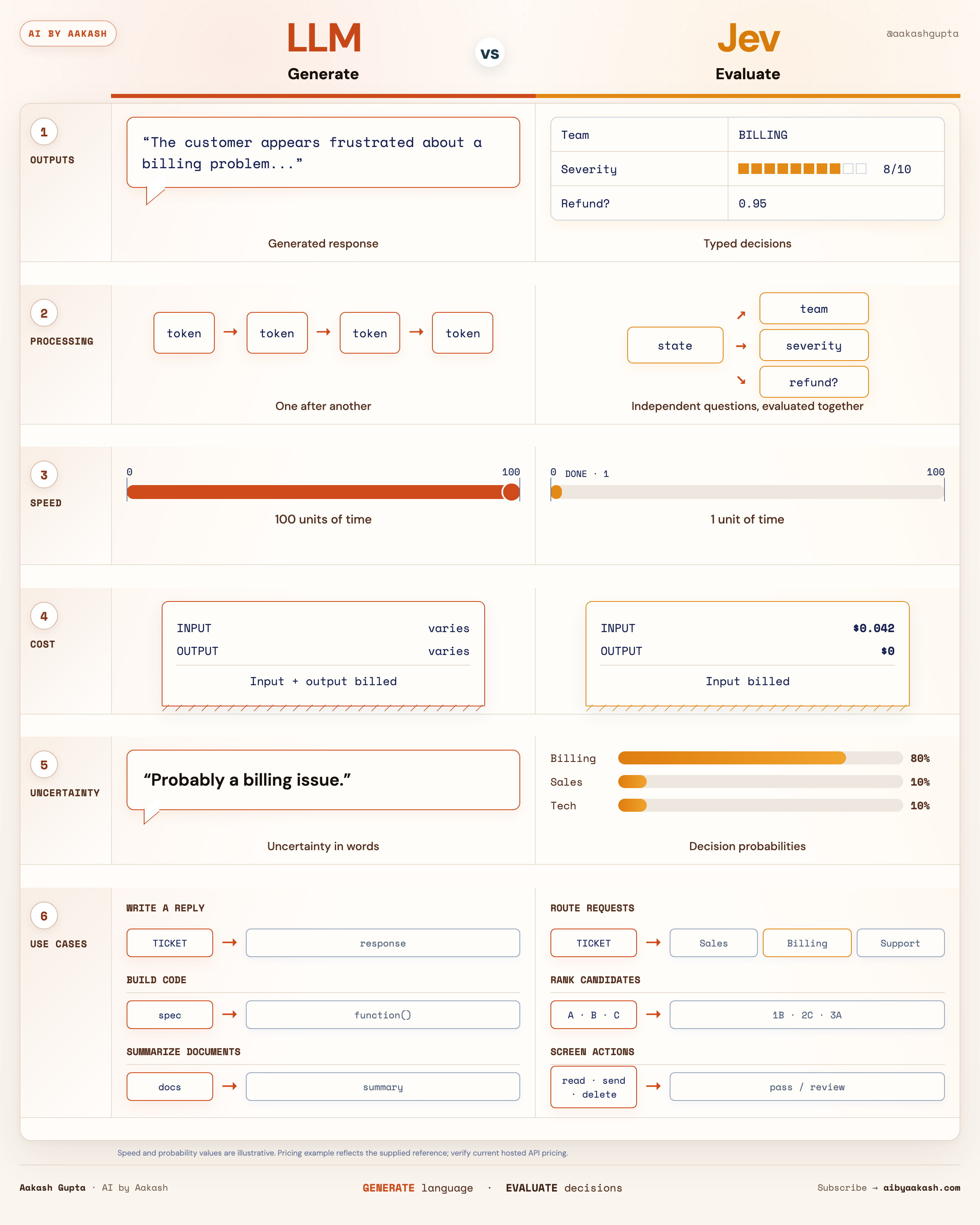
The LLM writes you a sentence saying the customer seems frustrated about billing.
Jev skips the sentence. You declare those questions up front, and it comes back with the answers as typed fields: BILLING, 8/10, 0.95.
That one design choice is behind both of Jev’s economic advantages.
Let’s see it in action.
3. How to setup Jev
It takes <2 minutes to use Jev:
Go to typesafe.ai
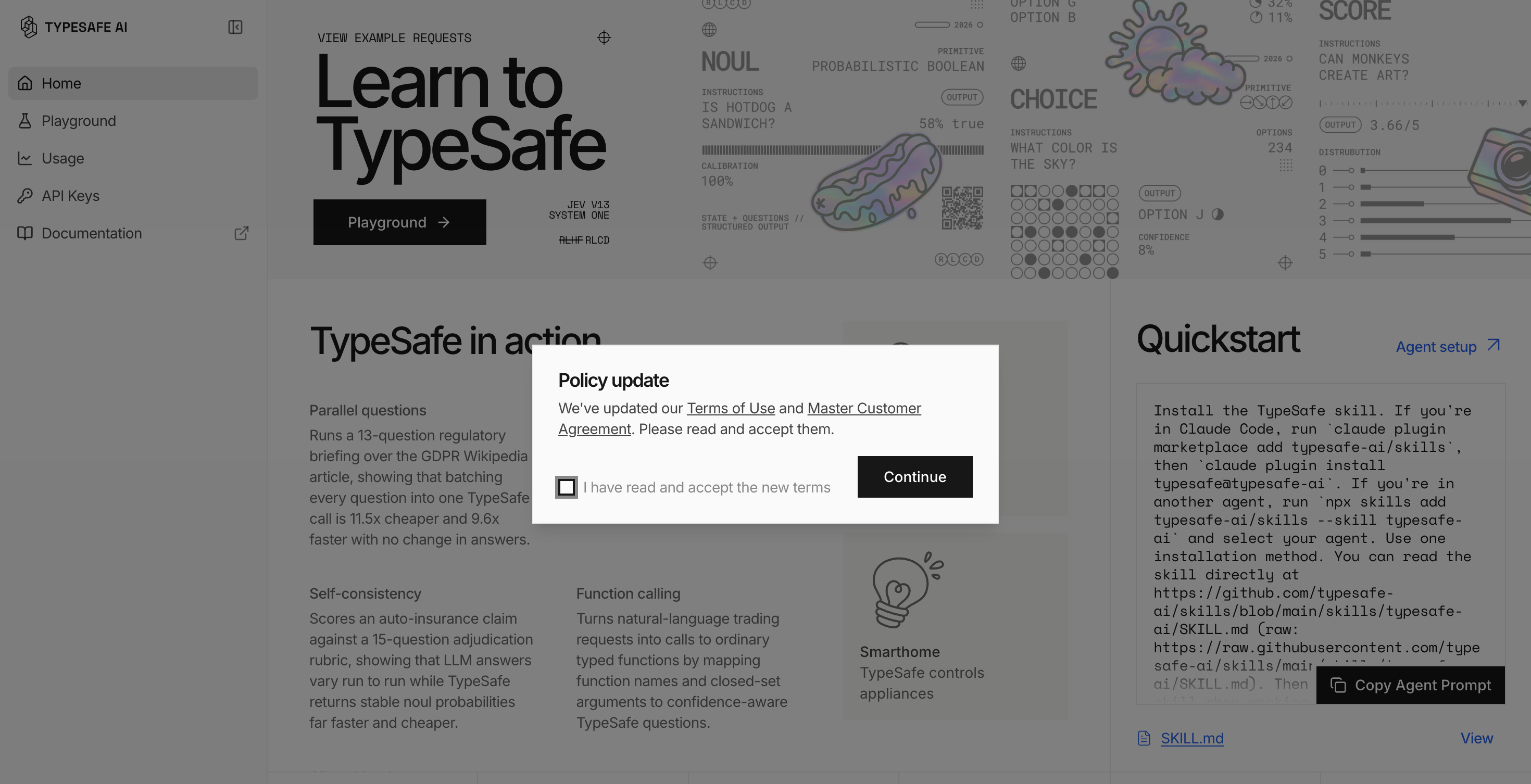
Then go to Claude Code or Codex and paste this command
plugin marketplace add typesafe-ai/skills
plugin install typesafe@typesafe-ai
Or you can copy paste this skill on their onboarding page
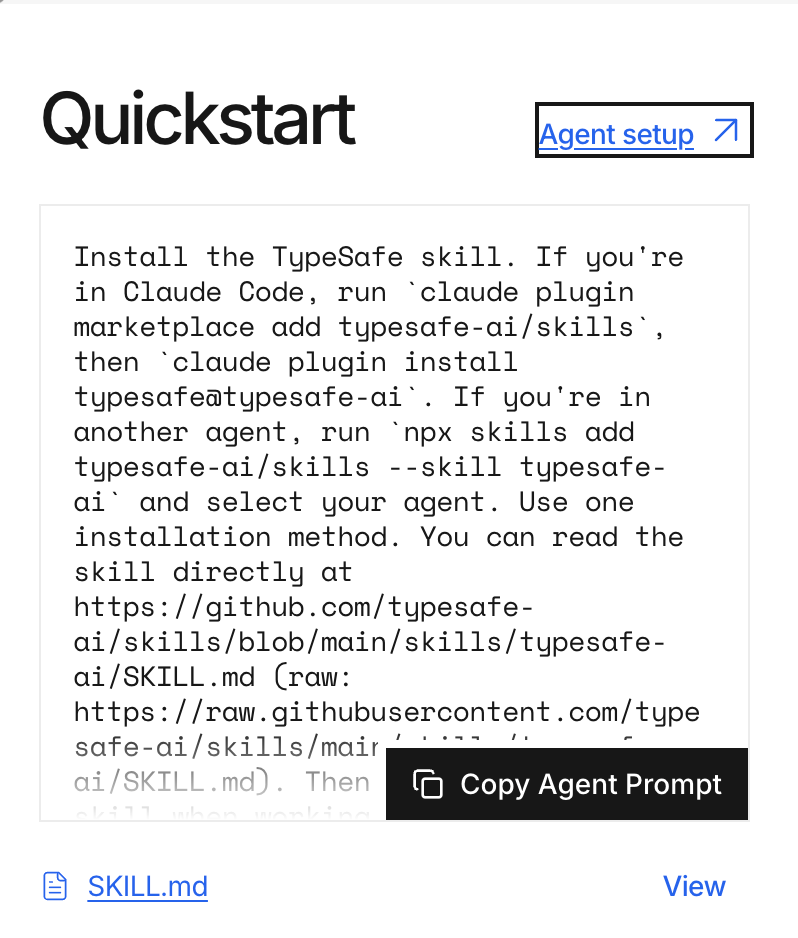
Then head over to https://console.typesafe.ai/keys and create an API key. Name it anything.
Then tell your harness:
open env file w a placeholder for me to add api key
Paste your API key in there. This is a more secure way to do it than to paste it into your chat with the LLM.
Vercel gateway is also providing free unlimited access to Jev till Sept 25. Grab your API key here: https://vercel.com/ai-gateway
4. Real life use cases
Now it’s time to start using Jev.
Use Case 1 - Fast Browser Use with Voice
The browser agents you use today call an LLM for every small choice: what to click, where to scroll. Is this even the right decision to make? That makes the exercise really, really slow and also pretty expensive.
Browser use plus Jev really flips the stack. Jev literally picks the next action from the state and only a small LLM call needs to be made when anything needs to be typed.
(use this repo to set it up : https://github.com/moritzkremb/jev-voice-browser)
Use Case 2 - Email Classification
Email classification is a classic automation use case most people use today using LLMs but it might not be the most efficient one. Jev can do that way too fast at a dirt cheap price.
Use Case 3 - AI PM Job Radar
Every AI PM job seeker asks me the same two questions. Where are the jobs? And do I need an ML background to get one?
So I pointed Jev at the job market.
I pulled every open role from the public job boards of 36 AI and tech companies: OpenAI, Anthropic, xAI, Databricks, Stripe, Figma, Perplexity, Cursor and more. That’s 8,354 open roles. A few lines of code kept the 781 with “product” or “PM” in the title.
Then Jev read every posting and answered five questions:
What kind of job is this really? PM, product marketing, design, engineering or sales.
Is the product itself AI?
What level is it?
Is hands-on ML experience a must-have?
Is an engineering background a must-have?
It took 6.4 seconds. It cost 7.6 cents.
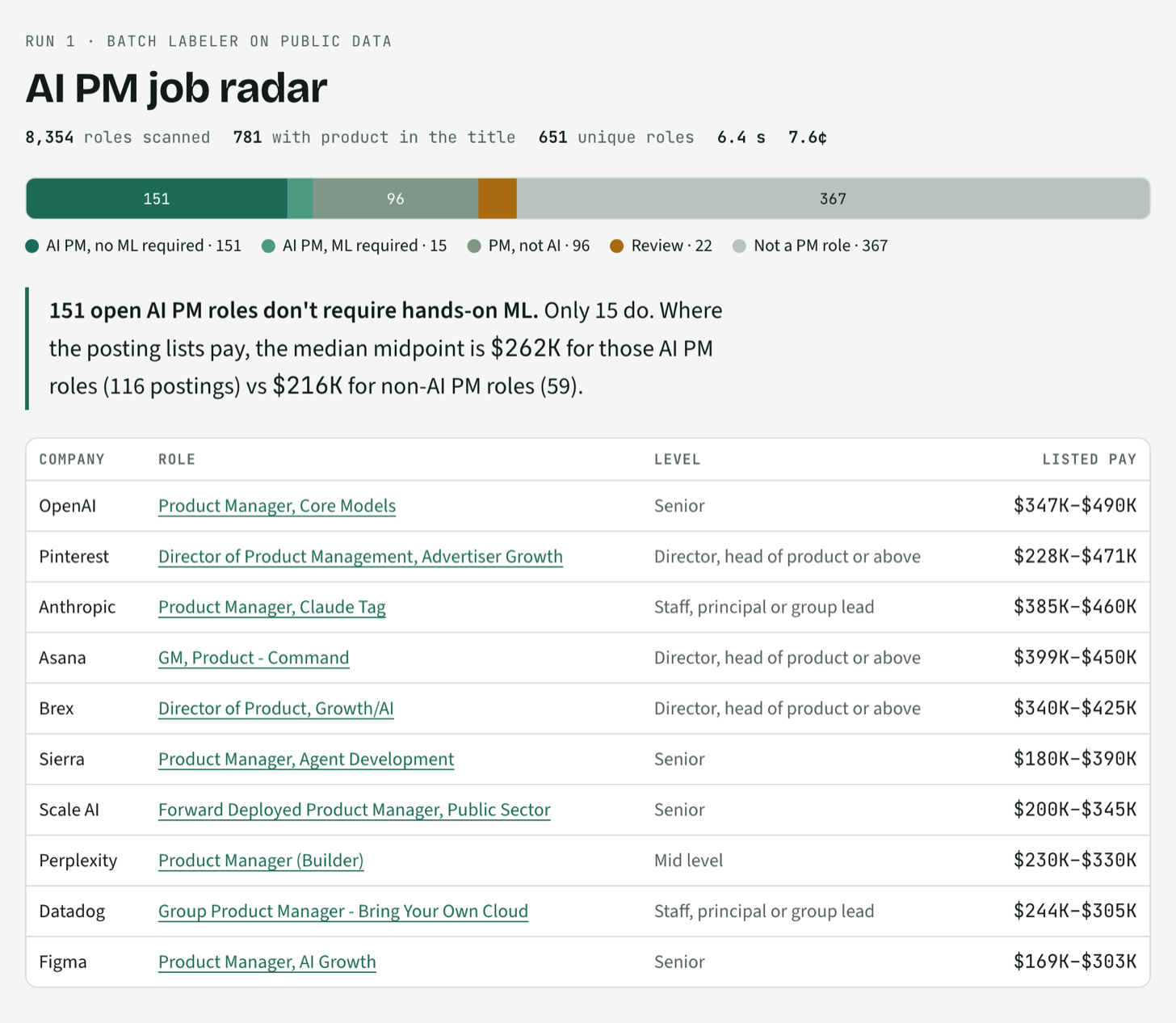
Here’s what came back, as of September 25:
151 open AI PM roles don’t require hands-on ML. Only 15 do.
AI pays. Where the posting lists pay, the median AI PM role sits at $262K (midpoint of the range, 116 postings). Non-AI PM roles: $216K (59 postings).
The door is narrow at the bottom. Only 8 of the roles are entry level: APMs, new grads and interns.
The best part was the mistakes it fixed.
A title filter counts “Director, Product Marketing” as a PM job. It counts Datadog’s “APM” roles too. APM there means Application Performance Monitoring. Those are engineers.
Jev threw both out. It also kept Asana’s “GM, Product,” which a title filter would miss.
It wasn’t perfect. The “requires ML” answer threw false positives between 0.5 and 0.7 confidence, like a Tax PM. So I only trust it above 0.7. That’s what the confidence score is for.
For scale: the run read 1.8M input tokens. At Fable’s $10 per million, that’s about $18 before you pay for a single output token. Jev did it for less than a dime.
Copy-paste this into Claude Code to run your own:
Use the TypeSafe skill. Pull every open job from the public Greenhouse, Ashby and Lever job boards for OpenAI, Anthropic, Databricks, Stripe, Figma, Perplexity and Cursor. Keep titles with “product” or “PM”. For each posting, ask Jev: is this really a PM role, is the product AI, what level is it, and is hands-on ML a must-have. Show me the AI PM roles with no ML requirement at my level, with pay where it’s listed, as a table.
Swap in the companies you actually want. Rerun it every Monday.
More Use Cases
There are so many more.
This is a very interesting resource on Jev to explore other possible use cases:
https://jevable.com/
LLMs already used to do most of these but what changes here is the cost, the speed, and the structured answer to it.
Now it’s time to create your own use case. I’ve created a skill below to help you prompt Jev:
5. The Limits of Jev
There are three major ones:
Small context window: Jev has a relatively small input context window (32K-64K tokens) which is significantly smaller than frontier LLMs that support 1M+ tokens.
No Vision / Multimodal Input: Jev cannot read or process images directly. It can evaluate a game state or screen (such as Checkers or Doom) by passing a raw structured text/data rather than pixel imagery.
Lack of deep reasoning: as it operates on reflex/classification engine, it basically operates as a pattern-matching “switch” statement and lacks all of the chain-of-thought traces or multi-step reasoning like in LLMs.
Let’s see what the team cooks up to address them.
Overall, this is where Jev fits and a Claude or Claude Code win:
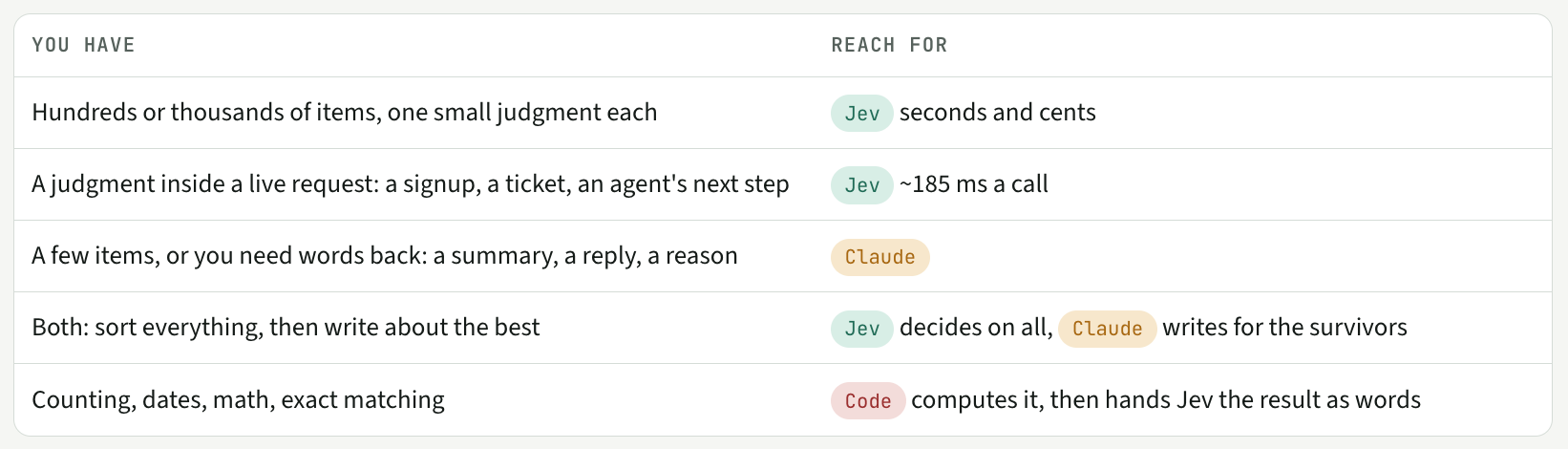
It’s quite an impressive scoreboard for a brand new model.
Talk to you next week 👋
Awesome stuff. Shame Jev is back to being waitlist-only.